I once thought of identity as an onion. Peel it layer by layer, and one would reach the core: a self without labels, without assignments, unmarked, universal. This is the self that is often invoked in abstract arguments about equality, the one that appears in statements such as, “At the end of the day, we are all human.” Yet, the very notion of this unmarked self is illusory. For some, humanness is recognized, affirmed, protected; for others, it must be continually proven, negotiated, and defended. The ideal of the unmarked self masks a persistent asymmetry in recognition and power.
As a child, the first identity I became fully aware of was orphanhood. Later, I discovered nationality. Not that I knew what nationality was, I just knew I was not an Iranian, and how badly I wanted to be one. They seemed more secure, more beautiful, more visible, their families possessed a comfort denied to mine. In Iran, we were “Afghani”, and they were Iranian; the distinction mattered in ways that went far beyond the abstract assertion of shared humanity. Later, when we moved to Afghanistan, I learned that even there, belonging had layers. “Afghan” identity itself was stratified and violent. Being Hazara carried a heavy social and political weight, one that shaped where you stood, how you were treated, your livlihood and how much of yourself was allowed to exist openly. And yet, even within this category, I did not fully belong. I was not accepted as a Hazara among Hazaras either. When it came to nationality and heritage, I was at the border, often an outsider.
As awareness of my gender emerged, the conditions under which I could inhabit the world changed. Certain freedoms, movement, expression, ambition were no longer available or imaginable for me. More layers accumulated: religion, language, class, gender, sexuality, body image, self-image, health and vulnerability, migration, legal status, history, and memory. They shaped how I moved through the world, how the world measured me, and how I measured myself. My relationship to these identities was often reactive, reactionary, marked by the desire to shed them entirely, to arrive at a “neutral” self unburdened by my history, social expectation and the rules and boundaries that came with it.
Little did I know that identity does not work that way. You cannot peel through the layers and arrive at a clean slate. Your layers are constitutive. Identity is formed through them. Identity, like history, is plastic, shaped and reshaped and entirely transformed through social and political encounters, through naming and renaming, recognition and exclusion. The unmarked self, imagined as universal or neutral, exists only in relation to power. Across societies, this obsession manifests in race, class, nationality, religion, gender, sexuality, virginity, or cultural “purity”.
Thus, identity cannot be understood as a preexisting core. It exists in tension, in the constant push and pull between how we are seen and how we see ourselves. Understanding it in this way is necessary if we are to grasp the political stakes of recognition, exclusion, and the claims of humanity itself.
It is from this understanding of identity (as historically produced, continually contested and transformed), and inseparable from relations of power) that, this year, at Subaltern Speaks, we turn our attention to identity as a central theme. The task is to sit with the difficulty of the questions identity raises: to dwell in uncertainty, and to allow the texts we encounter to unsettle inherited assumptions rather than confirm them.
Through sustained engagement with these questions, the hope is to build conversation and shared reflection that situate us, historically, politically, and personally, within the present moment.
To explore these concerns, the series turns to works of political theory and political philosophy emerging from postcolonial, feminist, Black, and Global South traditions. Many of these texts were written in moments of crisis, transition, or struggle, when questions of belonging, recognition, and power were definitive. Reading and rereading them now, amid war, displacement, rising authoritarianism, and renewed debates over identity, feels both necessary and urgent, particularly as identity is increasingly mobilized to justify violence and delimit the boundaries of belonging.
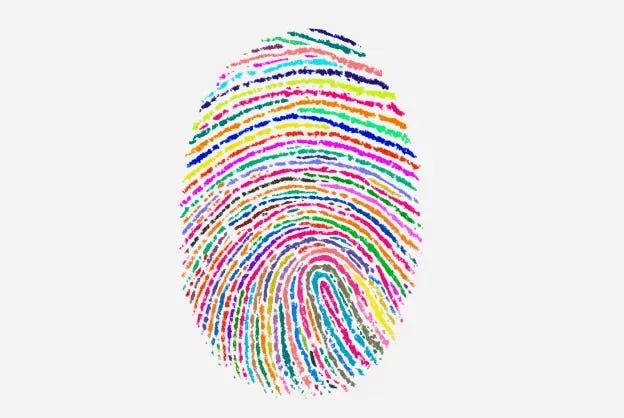
Through these series, I want to ask:
How is identity formed?
What parts of the self are learned in response to violence, exclusion, or surveillance?
What does it mean to live at the border between languages, genders, cultures, or political categories?
Can recognition coexist with deep structural inequality?
Can identity-based movements resist co-optation by states, NGOs, and markets?
Is it possible to build political coalitions without fixing identities into rigid categories?
What would politics and social relations look like if identity were neither erased nor absolutized?
How do we hold identity as historically produced without treating it as destiny?
And many more questions as we read along.
How, then, will this series unfold?
Each month, I will take up a book or, at times, a cluster of texts and reflect on the arguments at hand. The process will be thinking through the text, situating my own understanding and positionality in relation to it, and tracing its relevance to the social and political conditions of the present moment.
The reflections will aim to invite discussion, to create space for further reflection, disagreement, and collective thinking. Over time, certain questions may recur; certain texts may need to be reread. I invite rethinking and maybe unlearning and learning as we move through the texts.
I hope that, through these writings, a reading circle or collective might eventually take shape. For now, the invitation is open. You are welcome to join in whatever way and capacity feels possible to you. You can read along, agree with or against the texts, respond to the questions raised, or bring your own histories and contexts into the conversation. These books are not offered as guides for how we ought to understand or inhabit identity. We already live identity, daily, personally, unevenly, and most of the time under conditions not of our choosing. What we are attempting here is the cultivation of a space for critical reading, thinking, and reflecting together.
I look forward to reading with you.
Subaltern Speaks
The Reading List:
Identity & Subject Formation
Black Skin, White Masks, Frantz Fanon
Women and gender in Islam, Leila Ahmed
Orientalism, Edward Said
The Intimate Enemy: Loss and Recovery of Self under Colonialism, Ashis Nandy
Borderlands / La Frontera ,Gloria Anzaldúa
Bodies that Matter, Judith Butler
Recognition & Its Discontents
The Politics of Recognition, Charles Taylor
Justice Interrupts, Nancy Fraser
Cosmopolitanism: Ethics in a World of Strangers, Kwame Anthony Appiah
Identity, Francis Fukuyama
Identity Politics & Political Critique
Age of Anger, Pankaj Mishra
Identity and Violence: The Illusion of Destiny, Amartya Sen
Feminism Without Borders, Chandra Talpade Mohanty
Necropolitics, Achille Mbembe
The Force of Nonviolence, Judith Butler
Identity, Governance & Violence
The Politics of the Governed, Partha Chatterjee
Define and Rule, Mahmood Mamdani